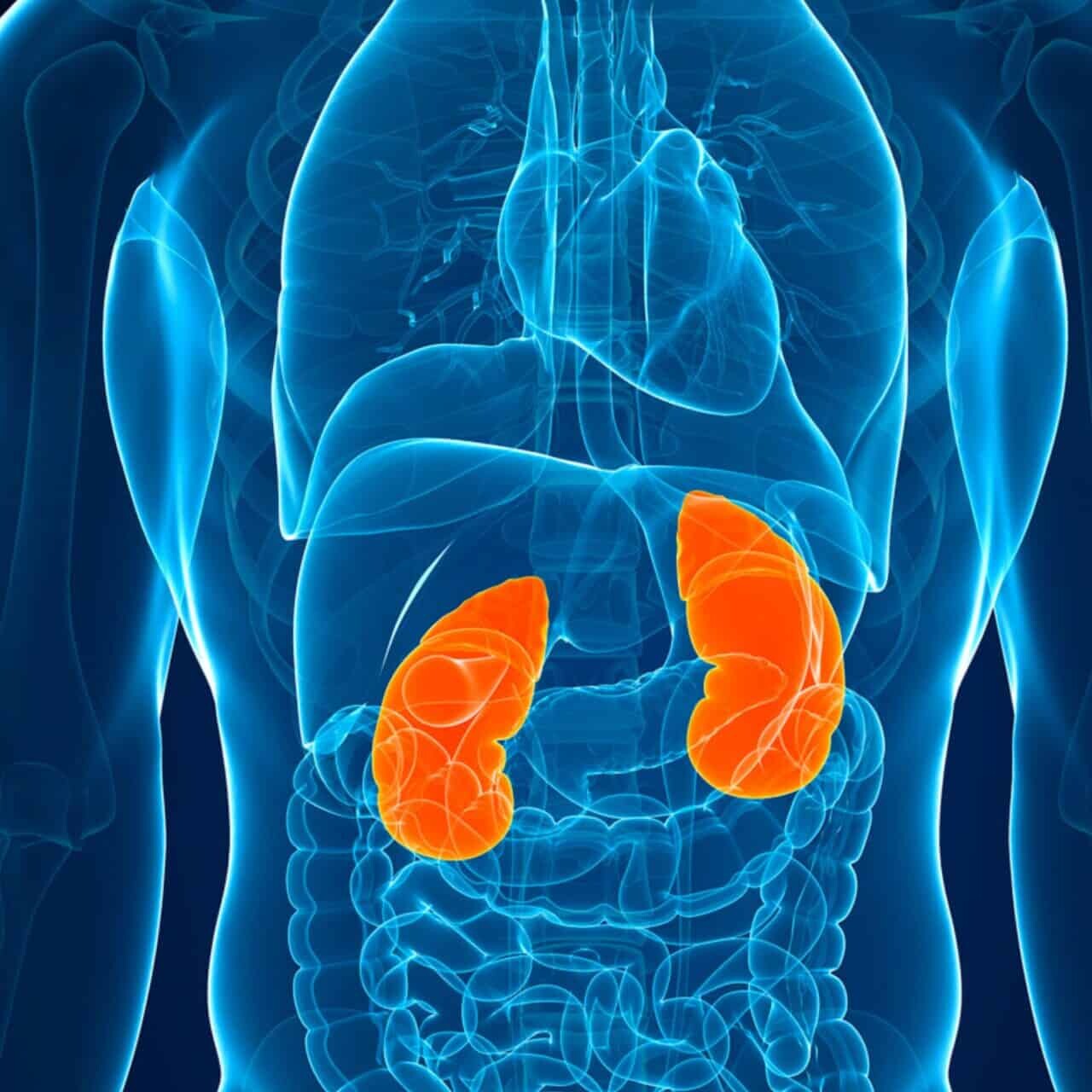
Cystatin C is increasingly used to estimate kidney function, especially when creatinine may be misleading. It can be helpful in people with low muscle mass, older adults, and patients whose creatinine does not seem to match the clinical picture. But cystatin C is not perfect. A new study in the Journal of the American Society of Nephrology found that some medications, especially systemic glucocorticoids, may raise cystatin C levels independent of measured glomerular filtration rate, or measured GFR. This means that in some patients, high cystatin C with steroids may make kidney function look worse than it truly is.
This is especially important for patients with glomerulonephritis, lupus nephritis, vasculitis, or other inflammatory kidney diseases who are often treated with high-dose prednisone, methylprednisolone, or other glucocorticoids.

By Majd Isreb, MD, FACP, FASN, IFMCP
What Is Cystatin C?
Cystatin C is a small protein produced by most nucleated cells in the body. It is filtered by the kidneys and can be used to estimate GFR, which is one of the main ways clinicians assess kidney function.
Compared with creatinine, cystatin C is less affected by muscle mass. That makes it useful in patients where creatinine may underestimate or overestimate kidney function.
However, cystatin C can still be influenced by non-kidney factors. These may include inflammation, thyroid status, obesity, smoking, certain diseases, and some medications. The new JASN study adds important evidence that systemic glucocorticoids may be one of those medication-related factors.

High Cystatin C With Steroids: What Did the Study Find?
The 2026 JASN study examined 5,595 adults who had cystatin C, creatinine, and had GFR measured using iohexol clearance. This is important because measured GFR provides a more direct assessment of kidney filtration than estimated GFR alone.
After adjusting for measured GFR and other clinical factors, the researchers found that systemic glucocorticoids, opioids, and loop diuretics were associated with higher cystatin C. The effect was most clinically meaningful for systemic glucocorticoids, especially at higher estimated daily doses.
In other words, cystatin C may rise in patients taking systemic steroids even when the measured filtration rate has not truly declined.
The study also found that cystatin C-based eGFR tended to underestimate measured GFR more in medication users, while creatinine-based eGFR tended to overestimate measured GFR. The combined creatinine-cystatin C equation provided the least biased estimate overall.

Why Would Glucocorticoids Raise Cystatin C?
The most likely mechanism is increased cystatin C production, not necessarily reduced kidney filtration.
Laboratory research has shown that dexamethasone can increase cystatin C secretion from cells in a dose-dependent way. This suggests that glucocorticoids may stimulate cystatin C gene expression and production.
Animal research supports this mechanism. In a rat study, dexamethasone increased plasma cystatin C levels without reducing GFR as measured by inulin clearance. The effect was blocked by RU486, suggesting that the rise in cystatin C was mediated through the glucocorticoid receptor.
Put simply, glucocorticoids may tell cells to make more cystatin C. If more cystatin C is produced, the blood level can rise even if kidney filtration has not worsened.
Join us to end the kidney disease epidemic
High Cystatin C With Steroids in Glomerulonephritis
This issue is especially relevant in glomerulonephritis.
Patients with glomerulonephritis may receive high-dose prednisone, methylprednisolone pulses, or other systemic steroid regimens. These are often used during periods when kidney function is already being watched closely.
If cystatin C rises during treatment, it may be tempting to assume that kidney function is worsening. Sometimes that may be true. But in a patient taking high-dose glucocorticoids, a rise in cystatin C could reflect:
- True worsening of kidney filtration
- Steroid-induced cystatin C production
- Inflammation or illness severity
- A combination of all of the above
This does not mean cystatin C should be ignored. It means cystatin C should be interpreted in the full clinical context.

Why Creatinine and Cystatin C Can Tell Different Stories
Creatinine and cystatin C are both useful, but they are influenced by different factors.
Creatinine is affected by muscle mass, diet, tubular secretion, and certain medications. Cystatin C is less dependent on muscle mass, but it may be affected by inflammation, steroid exposure, thyroid function, and other non-GFR factors.
This is why the combined creatinine-cystatin C equation can be helpful. When both markers are used together, the estimate may be less biased than either marker alone, especially when one marker is being distorted by a non-kidney factor. The JASN study found that eGFRcr-cys was consistently less biased than eGFRcr or eGFRcys alone among patients using these medications.

Practical Clinical Takeaway from High cystatin C with steroids
For clinicians, a key takeaway is this:
When a patient is taking high-dose systemic glucocorticoids, especially for glomerulonephritis or another inflammatory kidney disease, cystatin C-based eGFR may underestimate true GFR.
In this setting, consider:
- Reviewing the steroid dose and timing relative to the cystatin C test
- Comparing cystatin C-based eGFR with creatinine-based eGFR
- Using the combined creatinine-cystatin C equation when available
- Looking at the broader clinical picture, including BUN, urine findings, proteinuria, blood pressure, volume status, and disease activity
- Considering measured GFR in select cases where the result would change management
The goal is not to discard cystatin C. The goal is to avoid overinterpreting it as a standalone number.
Integrative Kidney Perspective
In integrative kidney care, lab interpretation should always be personalized.
A cystatin C result is not just a number. It exists within a context that includes medications, inflammation, immune activity, metabolic health, muscle mass, nutrition, body composition, and the patient’s underlying kidney disease.
This study reinforces a core principle of integrative nephrology: better care comes from understanding why a biomarker is abnormal, not simply reacting to the abnormal value.
For a patient taking high-dose steroids, especially for glomerulonephritis, high cystatin C may not always mean the kidneys are filtering worse. It may mean the body is producing more cystatin C under the influence of glucocorticoid signaling.
The Bottom Line on High cystatin C with steroids
Cystatin C is a valuable kidney marker, but it is not immune to outside influences. Systemic glucocorticoids, especially at higher doses, may raise cystatin C independent of measured GFR.
For patients with glomerulonephritis, lupus nephritis, vasculitis, or other inflammatory kidney diseases treated with high-dose steroids, cystatin C should be interpreted with caution. In many cases, the combined creatinine-cystatin C equation may provide a more balanced estimate of kidney function.
Kidney function is more than one lab value. Context matters.